




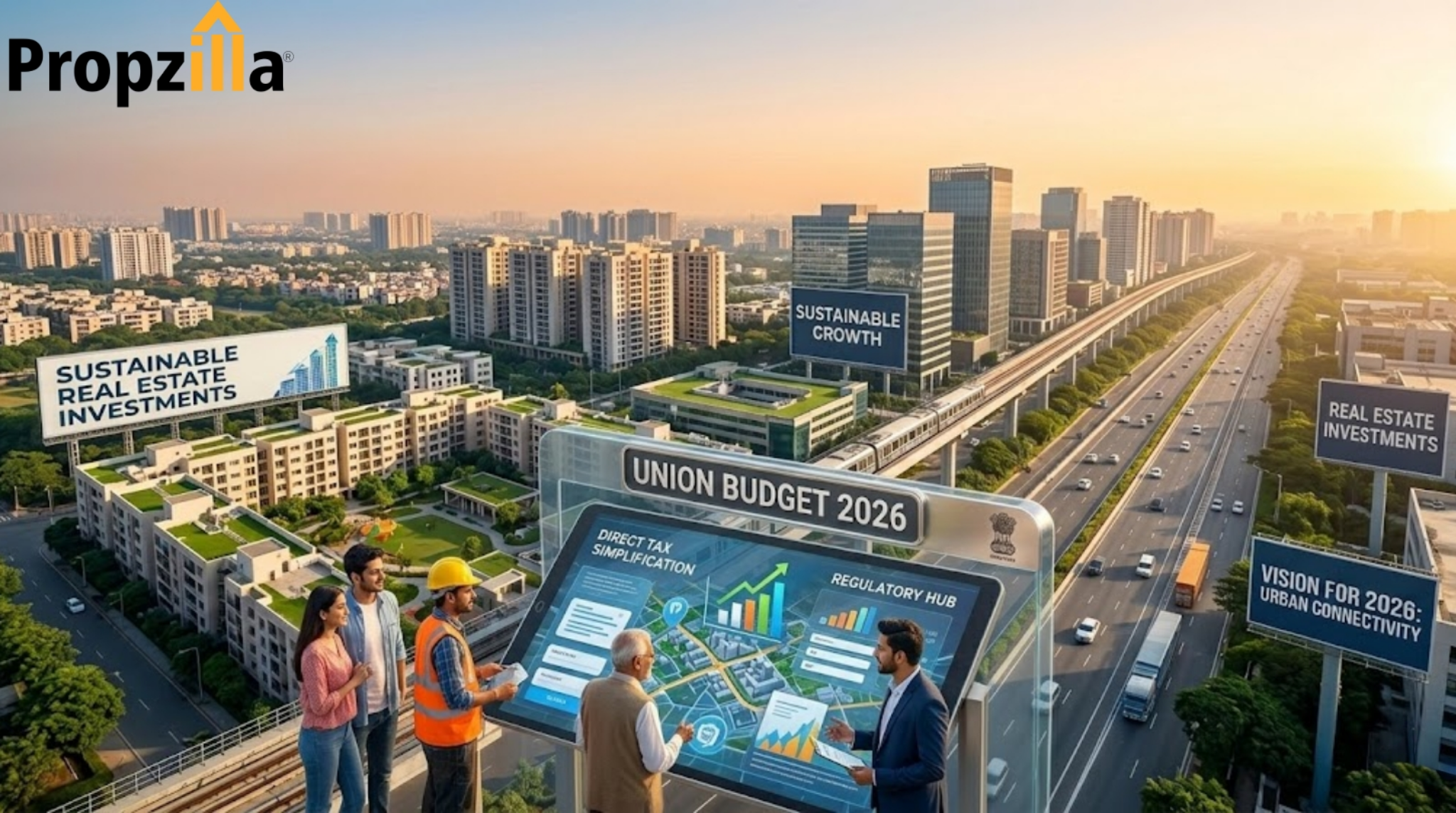
The Union Budget 2026, presented by Finance Minister Nirmala Sitharaman on 1 February 2026, sets a strong roadmap for how the Indian economy will evolve, particularly focusing on the real estate sector. The primary goal is to stimulate housing demand, accelerate infrastructure development, and attract high-value real estate investments.
In this comprehensive guide, we summarize the major announcements of the Union Budget 2026 and decode exactly how they impact India's real estate market for both end-users and investors.
The Union Budget 2026 focuses strongly on infrastructure growth, urban development, and housing initiatives that are expected to support long-term economic progress in India. This budget becomes especially important for investors, developers, and homebuyers who are closely connected with policy changes that could affect the property market.
Infrastructure development is the backbone of real estate appreciation. Improvements in highways, expanded metro networks, and the construction of new logistics corridors are guaranteed to increase the demand for both residential and commercial properties across India.
Improving affordable housing programs will motivate developers to concentrate more on mid-income and budget-friendly projects. With the parameters set in the Union Budget 2026, government housing schemes remain an absolute priority, highlighting the focus on India’s growing demographic housing demand.
Affordable housing continues to be a cornerstone of government policy. The aim is to make homeownership accessible to a larger section of the population, while simultaneously encouraging growth in the construction sector.
For homebuyers, this focus translates into a broader array of housing options at reasonable prices, along with much better financing opportunities that make acquiring a home simpler and more feasible than before.
Indian residential and commercial property values continue to rise as cities expand and new economic zones are designated. Well-planned urbanization strongly enhances living standards, generates bulk employment, and creates massive business and investment opportunities. Property demand is naturally expected to multiply as job opportunities cluster in these emerging cities.
Under the Union Budget 2026 framework, the government aims to make property transactions significantly easier. The strict focus is on reducing bureaucratic procedural hurdles and streamlining the transaction lifecycles for both domestic buyers and investors.
The budget introduces clear steps to simplify property-related processes, specifically targeting overseas investors. These measures make the Indian luxury real estate market highly attractive to Non-Resident Indians (NRIs) and global institutional buyers.
Simpler regulations and clearer compliance processes attract greater market participation, helping international investors feel fundamentally more confident about investing capital in Indian property.
Post-budget, developers are consciously shifting focus toward integrated townships, budget-friendly community homes, and mixed-use developments that support long-term ecological and sustainable growth.
Since investors prioritize long-term, stable policies, the documented government support for housing and public infrastructure is expected to strongly stimulate market activity throughout the financial year.
Despite these highly positive indicators, the real estate sector still navigates several challenges. Rising raw construction costs, localized regulatory hurdles, and fluctuating micro-market demand can occasionally delay projects or affect launch pricing.
Industry experts also point out that additional direct tax incentives for individual homebuyers could have further boosted retail demand. However, systematically addressing these operational challenges will definitely accelerate sector growth and encourage wider demographics to invest confidently.
The government is banking on long-term growth in the real estate sector through improved national infrastructure and modernized housing development frameworks. As urban migration continues, infrastructure quality will become the ultimate deciding factor from a homebuyer’s perspective. Builders, institutional investors, and first-time homebuyers must closely monitor these active government policies to make data-driven decisions for future investments.
The Union Budget 2026 underscores the government’s unwavering commitment to infrastructure expansion, urban upgrading, and the housing sector. Drastically improved transparency in property transactions combined with stronger national connectivity will undoubtedly create long-term wealth opportunities for developers, end-users, and investors alike. As real estate plays a pivotal role in India’s ongoing economic progress, rising urban demand is officially set to drive steady market growth and reinforce investor confidence through 2026 and beyond.
You May Also Read :
|
Top 10 Ready To Move Projects in Gurgaon |
|
|
Guide To Buying Property in Dubai 2026 |
|
|
Know The Griha pravesh Muhurat Timings |
|
|
Best Areas to Live in Gurgaon With Family |
The Union Budget 2026 strengthens affordable housing schemes, effectively supporting steady supply growth across India's mid-segment real estate markets.
With stronger national infrastructure development, emerging tier-2 and tier-3 cities will witness significantly higher housing demand and increased investment opportunities.
It supports holistic real estate growth through major public infrastructure expansion, streamlined investment processes, and better housing policy enforcement.
Supportive financial policies are aimed at improving financing access, making it administratively easier for homebuyers to secure loans and invest in property.
Prices are projected to gradually rise in regions experiencing rapid infrastructure development, enhanced metro connectivity, and steady corporate job creation.
Yes, substantially improved compliance transparency and infrastructure updates make the Indian market highly attractive and secure for Non-Resident Indians (NRIs) and global buyers.
Cities with strategic urban planning, upcoming economic zones, and dedicated logistic corridors are likely to attract the highest volume of real estate investments.
Prudent investors should carefully assess micro-factors like macro location growth, upcoming government infrastructure projects, and local market demand before making a luxury villa investment.
The budget actively boosts tier-2 and tier-3 cities by heavily decentralizing development parameters and supporting localized infrastructure and housing demand.
Absolutely, thanks to relentless corporate growth, massive upcoming developments like the Dwarka Expressway, and top-tier infrastructure, Gurgaon remains a premier hub for premium investments in 2026.

Oct 17, 2025

Sep 14, 2022

Sep 14, 2022

Dec 19, 2024

Apr 11, 2026

Jul 23, 2026

Sep 14, 2022

Apr 14, 2026

Sep 16, 2026

Aug 18, 2026

Sep 19, 2026

Jul 15, 2026













.webp)





.webp)


.webp)



.webp)
.webp)

0 Comments
Leave a Comment