





For years, Gurgaon has consistently been a magnet for property investors. Here we are in 2026, Gurgaon continues to reclaim its #1 spot as India's crown jewel in the property playground. The Millennium City has evolved into a city-within-a-city, thanks to its smart townships, high-rise luxury residences, bustling business enclaves, and streamlined metro connectivity. The ever-increasing demand for nature-inspired designs, co-living spaces, and next-gen homes makes the city offer you dynamic and promising offerings throughout the years.
So the truth is: to buy property in Gurgaon is not just about choosing a location — it is about timing your entry into the right corridor, with the right builder, backed by clean legal paperwork. And in 2026, the fundamentals have never been stronger.
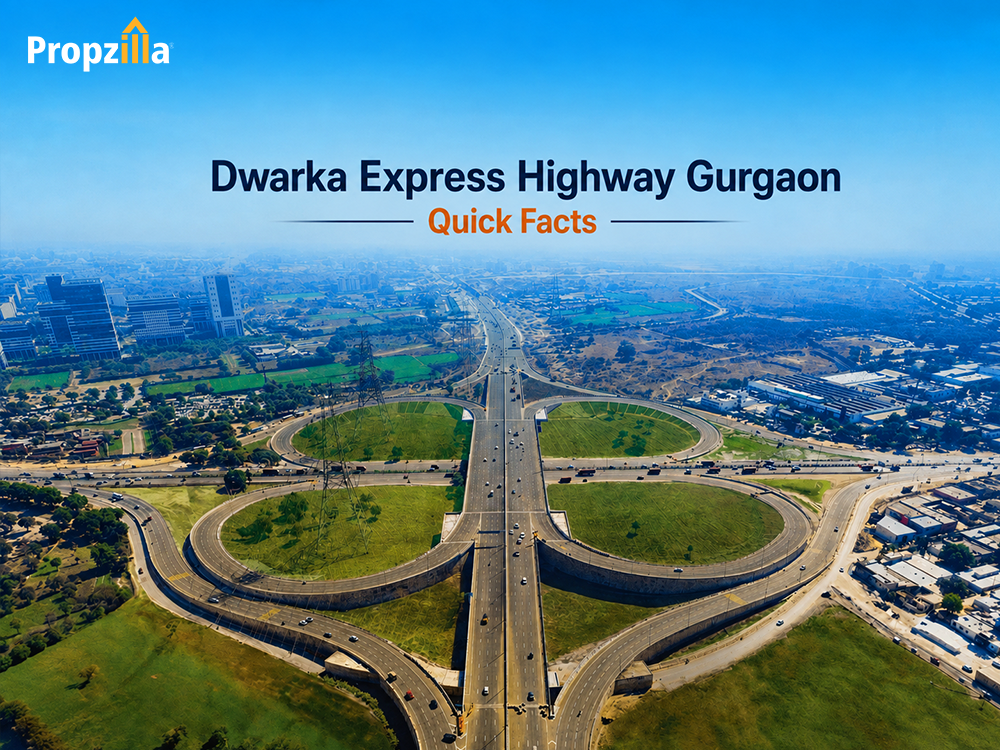
In 2026, Gurgaon is poised for renewed momentum as the country's most infrastructure-led real estate market. Expressways like the Southern Peripheral Road (SPR) and Dwarka Expressway have significantly improved connectivity across the NCR. Metro expansion is threading through the city's growth corridors, reducing commute dependence on private vehicles. At the same time, Gurgaon contributes approximately 70% of Haryana's GDP and is home to several Fortune 500 companies — making residential demand fundamentally different from sentiment-driven markets.
Property values in established corridors like Golf Course Road and Golf Course Extension Road have shown consistent appreciation driven by limited supply and high corporate demand. Emerging zones such as Sectors 84-85 on SPR and the Dwarka Expressway belt (Sectors 102-113) are attracting premium developers. The combination of infrastructure maturity, employment base, and governance transparency makes Gurgaon a reliable market for both first-time buyers and seasoned investors in 2026.
Before you begin your search, define clearly why you are buying — this single decision shapes every subsequent choice. Are you buying for personal use or as an investment?
Most buyers underestimate the total cost of purchasing property in Gurgaon. The base price is only the starting point. In Haryana, the following statutory costs apply in 2026:
| Cost Component | Rate (Urban Areas) | Notes |
|---|---|---|
| Stamp Duty (Men) | 7% of property value | Mandatory, paid at Sub-Registrar Office |
| Stamp Duty (Women) | 5% of property value | Concession for female buyer/co-owner |
| Stamp Duty (Joint) | 6% of property value | Male + Female joint ownership |
| Registration Charges | 1% of property value | Capped at ₹50,000 maximum |
| GST (Under-Construction) | 5% of base price | Not applicable on ready-to-move properties |
| Parking + Maintenance Deposit | ₹5L–₹15L (approx.) | Project-specific, paid to developer/RWA |
| Total Additional Cost Range | 10%–15% of base price | Budget accordingly before finalising |
Also verify your home loan eligibility and EMI affordability before committing. Banks typically approve up to 80% of the property value, subject to income documentation. Keep a contingency reserve for interior fit-out and society move-in charges. If you are budget-conscious, explore our guide on ready-to-move projects in Gurgaon under ₹3 crore.
Choosing the right sector is the single most important investment decision when you buy a luxury flat in Gurgaon. Here is a practical overview of Gurgaon's key residential corridors in 2026:
| Corridor | Key Sectors | Approx. Price Range (per sq. ft.) | Best For |
|---|---|---|---|
| Golf Course Road | Sectors 42, 54, 56 | ₹15,000 – ₹25,000+ | Ultra-luxury end-users, HNI investors |
| Golf Course Extension Road | Sectors 57, 59, 65, 66 | ₹10,000 – ₹18,000 | Premium buyers, corporate professionals |
| Dwarka Expressway | Sectors 102–113 | ₹9,000 – ₹16,000 | Airport connectivity, NRI buyers |
| Southern Peripheral Road (SPR) | Sectors 70–76, 84–85 | ₹8,000 – ₹15,000 | Long-term appreciation, emerging corridor |
| Sohna Road | Sectors 47, 48, 49 | ₹7,000 – ₹13,000 | Mid-range families, first-time buyers |
Also consider future development plans in the vicinity — upcoming metro stations, school infrastructure, and commercial zones directly impact long-term appreciation. For a detailed breakdown by investment budget, read our guide on the best sectors to invest in Gurgaon under ₹1.5 crore.
Not all developers are equal. Delivery track record, construction quality, and post-handover operations should drive your decision — not just launch pricing or brochure aesthetics.
This is the step where most buyers cut corners — and where the most expensive mistakes happen. Before signing any agreement, ensure the following documents are verified by a qualified property lawyer:
Never make a final decision based solely on brochures, renders, or sample flats. A sample flat is a controlled, styled showcase — it is not representative of a standard unit in the building.
The final stage requires patience and financial discipline.
With AI-backed loan approvals and digital paperwork, 2026 offers faster and more streamlined home financing than any previous year. Leading banks and NBFCs offer competitive rates tailored for both first-time buyers and repeat investors. Always compare the effective interest rate (inclusive of processing fees) and not just the headline rate.
| Lender / Type | Starting Rate (p.a.) |
|---|---|
| SBI | 7.50% |
| HDFC Bank | 7.90% |
| ICICI Bank | 7.70% |
| TATA Capital (NBFC) | 7.75% |
| Bank of Baroda | 7.45% |
| PNB Housing | 8.25% onwards |
*T&C apply. Rates subject to change. Verify current rates directly with the lender.
At Propzilla, we have seen buyers make these mistakes repeatedly — and each one is avoidable with the right information.
Gurgaon in 2026 is at the right intersection of infrastructure maturity, employment growth, and genuine buyer protection through RERA. Whether you are a first-time buyer or a seasoned investor, the process to buy property in Gurgaon rewards discipline: define your purpose, budget for all statutory costs including stamp duty and registration, verify every legal document independently, and choose your developer based on delivery record — not brochure quality.
At Propzilla, we work exclusively with verified projects and provide honest, no-pressure assessments to match you with the right investment. Explore our residential properties in Gurgaon or speak to a Propzilla advisor at 8010 500 900 to begin your search with complete clarity.
In Haryana's urban areas, stamp duty is 7% of the property value for male buyers, 5% for female buyers, and 6% for joint male-female ownership. Registration charges are an additional 1% of the property value, capped at a maximum of ₹50,000. For under-construction properties, GST of 5% also applies on the base price. On a ₹1 crore purchase, a male buyer should budget approximately ₹7–8 lakh in stamp duty and registration alone, before accounting for GST and other charges. Always pay stamp duty on the actual market value — understating for tax avoidance creates long-term title complications.
Visit the official Haryana RERA portal at hareraggm.gov.in. Navigate to the Projects section and search by the project name, developer name, or the RERA registration number mentioned in the developer's brochure or agreement. The portal displays the registration certificate, valid completion date, quarterly construction progress reports, and any complaints filed against the project. If the registration has expired or the completion date has been extended multiple times, treat it as a significant red flag and consult a property lawyer before proceeding.
Yes, for buyers with a 5–7 year investment horizon. Gurgaon's established residential corridors — Golf Course Road, Golf Course Extension Road, and Dwarka Expressway — are showing consistent, infrastructure-driven appreciation backed by strong corporate employment. The city contributes approximately 70% of Haryana's GDP and hosts several Fortune 500 company headquarters, creating durable residential demand. However, avoid short-term speculation: the 7% stamp duty and registration cost on entry, plus 2% brokerage on exit, means the market must rise at least 9–10% before you break even on a quick sale.
For long-term appreciation, Sectors 84–85 on the Southern Peripheral Road, Sectors 59, 65, and 66 on Golf Course Extension Road, and the Dwarka Expressway belt (Sectors 102–113) are consistently performing well in 2026. Golf Course Road (Sectors 42, 54) remains the most stable ultra-luxury address but has limited new inventory. For families, Sectors 47–49 and 56–57 offer a good balance of established infrastructure and reasonable pricing. Explore the top family-friendly sectors in Gurgaon for a detailed area guide.
For families, DLF Phase 5 (Golf Course Road), Sector 57 and 59 on Golf Course Extension Road, and Sector 65-66 are consistently preferred. These areas offer proximity to reputed international schools, multi-specialty hospitals, well-maintained internal road infrastructure, and low-density residential communities. Dwarka Expressway sectors (103–109) are rapidly gaining popularity for family living due to newer infrastructure, larger project formats, and better per-square-foot value compared to Golf Course Road. Read our comprehensive guide on the best places to live in Gurgaon for a full neighbourhood analysis.

Oct 17, 2025

Sep 14, 2022

Sep 14, 2022

Dec 19, 2024

Apr 11, 2026

Jul 23, 2026

Sep 14, 2022

Apr 14, 2026

Sep 16, 2026

Aug 18, 2026

Sep 19, 2026

Jul 15, 2026












.webp)



.webp)


.webp)



.webp)
.webp)

0 Comments
Leave a Comment