




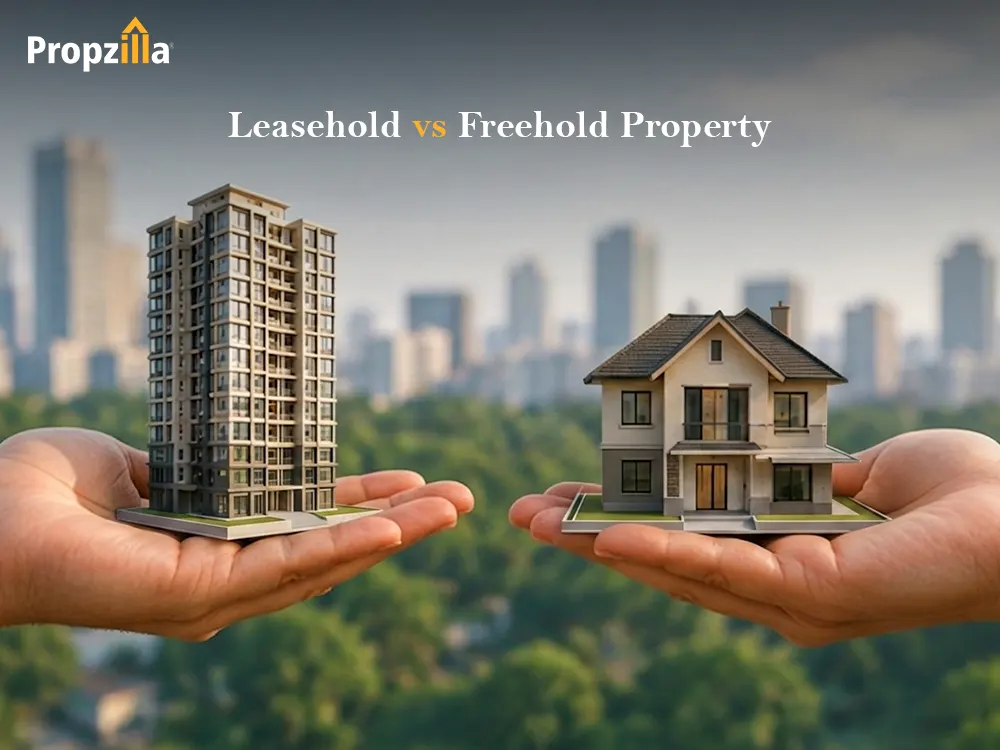
The first benefit of a freehold estate is permanency. There is no expiration of the lease period after which one has to bother.
Secondly, the owners of freehold estates have more freedom to sell their properties or transfer ownership. The owners can give the property as an inheritance to their children in accordance with property law and laws of succession.
There is also the possibility of higher demand from potential buyers since the buyers get the right of permanent ownership, and thus freehold estates can be easily sold.
Lastly, there might be an easy evaluation of the freehold estate by the financiers since the ownership can be easily evaluated.
On the other hand, complete ownership entails full responsibility. The owner has the obligation to make all payments regarding the property.
A freehold property is that type of property where the ownership belongs to both the building and the land upon which the property is constructed. In contrast to a leasehold property, there is no term of lease attached to it.
Moreover, the owner has more control over the property and may sell or transfer or renovate the same according to the laws and norms prevailing locally.
The most prominent feature of freehold property in India is the ownership in perpetuity. It would mean that the owners intend to keep the property either for many years to come or wish to pass on to the next generation.
However, the freehold property will be much more advantageous in case of resale, as most people would want to buy the property with perpetual ownership. But at the same time, the price of the freehold property may be higher, as it includes ownership of the land.
The first benefit of a freehold estate is permanency. There is no expiration of the lease period after which one has to bother.
Secondly, the owners of freehold estates have more freedom to sell their properties or transfer ownership. The owners can give the property as an inheritance to their children in accordance with property law and laws of succession.
There is also the possibility of higher demand from potential buyers since the buyers get the right of permanent ownership, and thus freehold estates can be easily sold.
Lastly, there might be an easy evaluation of the freehold estate by the financiers since the ownership can be easily evaluated.
On the other hand, complete ownership entails full responsibility. The owner has the obligation to make all payments regarding the property.
A leasehold property refers to a situation in which the buyer or lessee has the right to occupy and use the property for a specified time, as stated in the lease document.
In this type of transaction, the owner of the underlying land will be the lessor, and this may be either a government body or development authority or even a private landowner.
Leasehold properties have various lease lengths, and in some cases, they are lengthy, making the property suitable for residential or investment purposes.
There are several reasons why buyers consider buying leasehold properties in India; one major reason is affordability since the buyer is not entitled to permanent ownership of the underlying land.
Buyers need to study the lease document well before acquiring such properties because several aspects of the leasehold property may affect the value of the property in the future.
Affordability is one major advantage of the leasehold property relative to the same type of freehold properties.
Another benefit of the leasehold property could be the accessibility to developed and established locations at prices that may be higher for the similar freehold properties or where freehold properties may not be available.
A buyer who is concerned about both location and the price may find the leasehold property more realistic than relocating himself to an undeveloped location in order to buy the freehold property.
Investors who want to have a good return from rental income through the leasehold property may go for it if it offers favorable terms of leasing, rental demand, and resale opportunities.
Nevertheless, affordability must not be the only criterion for making decisions about the purchase.
The major difference between leasehold and freehold properties is the type of ownership and its period.
Where freehold properties are concerned, the owner usually owns the land and building forever, provided that the law permits it. In leasehold properties, the purchaser will own the rights to occupy the property based on the period and conditions stipulated in the lease document.
It is these differences that make the two types of property ownership different in a number of areas.
Freehold property owners are usually in a better position when it comes to selling, transferring, and even making modifications to their property. The leaseholders, however, may be required to observe other conditions when selling or even modifying their properties as well as getting permissions from the concerned authority.
The period of remaining tenure of ownership is another area where there exists a difference between the two types of ownership. Whereas the freehold property has no lease expiration period, the leasehold one has and can influence the price of resale of the property.
Another difference in inheritance can also exist between the two types of property ownership.
In the comparison of freehold vs. leasehold, one of the aspects that need to be considered is resale value.
One reason why freehold may offer an edge in this aspect is due to the fact that ownership rights will be permanently transferred to the buyer. However, it does not mean that a leasehold property cannot be sold at all if it is in a good location and has plenty of years left on the lease.
In any case, location still plays an essential role in determining property value. It may so happen that a leasehold property, due to its good location, is more valuable than a freehold property situated in a poorly located place.
This is why buyers should not consider ownership in isolation.
Property financing may also be affected by its ownership structure. Freehold property will likely have a simple ownership structure, and this makes it easy to assess the property as security for the loan.
On the other hand, leasehold property can also be eligible for home financing, but the lenders may consider other aspects before lending money to the borrower. The aspects could include the time left in the lease agreement, title papers, conditions of transfer, permission, and legality of the property.
It will become difficult for leasehold property with a very short tenure because lenders must ensure that the property retains its value during the loan period.
Consequently, it is recommended to discuss your property with the lender before purchasing it.
Freehold property can be an ideal choice for people seeking long-term security and ownership.
This may be perfect for people who want to make a family heirloom, for investors who are looking for long-term appreciation and for property owners who want more freedom in how they use the property.
A freehold property might feel more comfortable for those who want to own a property forever and pass it down to their children or heirs in general.
A leasehold type of property can be suitable for people who value cost and location.
For instance, someone with a tight budget can buy a leasehold property in a good location instead of a freehold property in that same location. This arrangement could also be suitable for an investor whose major aim is making rental profits from the property and he/she does not plan on holding it for many generations to come.
The important thing is for buyers to check the lease term, transfer, fees, etc., before buying.
Irrespective of whether the property you intend to buy is a leasehold property or a freehold one, legal due diligence is critical. Ensure that you check the title deeds of the property, the property's ownership, the sale agreement, and the necessary approvals.
If you are buying a leasehold property, it is extremely important to check the lease deed that you signed at the beginning. The buyer needs to determine if there are any pending debts, legal disputes, or other issues with the property. You will also need to check the relevant approvals and certificates.
It should be noted that in certain situations leasehold-to-freehold conversion is possible according to government policies and guidelines.
Such a procedure might include filing an application together with appropriate property documentation and paying certain conversion fees. It should be understood, however, that it is not always possible to convert a leasehold property into freehold property.
The requirements and procedure of conversion depend on the particular authority and area. For this reason, buyers considering leasehold property for the purposes of conversion must inquire about current regulations.
The ideal solution to the dilemma of selecting between freehold and leasehold property will depend on the individual’s perspective. In case one is the type of individual whose priorities lie with permanence and security, then freehold property would work best for such an individual. If one takes into consideration aspects such as affordability and location being more critical, together with the leasehold period of the property still having much time left, then leasehold property could be selected.
Before making the final decision regarding the type of property one should select, compare the property considering its purchase cost, location, time left in the lease, resale value, funding, documentation, and duration that one intends to hold onto the property.
An ideal property need not be a property that has the best location and most affordable prices.
Before making an investment in real estate, it is necessary for one to know about leasehold and freehold properties. Freehold properties are generally more secure and offer greater control, but leasehold properties also have their advantages. It all depends on the financial situation of the buyer. For guidance on choosing the right property based on your budget, location and long-term goals, consult Propzilla.
This decision will help in protecting your investment as well as your home in the future.
In freehold, one acquires the ownership of both the property and the land permanently. The owner of a leasehold has the right to use the property for the duration of the lease.
As far as long-term ownership is concerned, freehold is preferable because you will get permanent ownership. However, if the buyer has a greater concern for affordability and location, then the leasehold property can be the better choice.
A leasehold property can be an investment if it has a good location, a long remaining lease, good potential for rental income, and reasonable resale potential. One should review the terms of the lease before making the investment decision.
One can sell the property if it is allowed by the terms of the lease agreement and respective laws. Sometimes it is necessary to obtain permission from the corresponding authority.
In some cases it is possible if the buyer meets the eligibility criteria set by government policies and rules of the authority.
Yes, it is possible but the lender may consider many factors related to the leasehold properties such as the remaining lease period, title deeds, conditions of transfer, etc.
A freehold property has an edge since there is no limitation in the ownership. However, the resale value is also influenced by several factors such as the location of the property, demand, condition of the property, price, etc.
The buyer has to check the original lease deed, remaining lease period, renewal terms, transferability, associated costs, ownership papers, dues outstanding, litigation issues and loan eligibility.
Freehold property is relatively easier to hand down from one generation to another due to the absence of a lease ending date. Inheritance of property is still governed by succession laws that apply to property inheritance.
If you intend to keep your property for many years ahead and hand it down to subsequent generations, then freehold is better than leasehold. If location and affordability are your key criteria, then leasehold could be a perfect choice.

Oct 17, 2025

Sep 14, 2022

Sep 14, 2022

Dec 19, 2024

Apr 11, 2026

Jul 23, 2026

Sep 14, 2022

Apr 14, 2026

Sep 16, 2026

Aug 18, 2026

Sep 19, 2026

Jul 15, 2026












.webp)




.webp)


.webp)




.webp)
.webp)

0 Comments
Leave a Comment